

🎁 How to apply the TRX Training Discount Code

The five TRX triceps exercises worth your time are the TRX Triceps Press, the TRX Triceps Kickback, the TRX Overhead Triceps Extension, the TRX Chest Press and the TRX Push-up with your feet in the foot cradles. Between them they cover every job the triceps has: straightening the elbow with your arms overhead, straightening it with your arms down by your hips, and straightening it under a heavy pressing load.
A suspension trainer doesn’t load your triceps the way a cable machine does. On a cable stack, the machine decides which direction the resistance pulls. On a strap, the resistance always pulls back toward the anchor point — and you set how much of your body weight goes into it by choosing where your feet stand. Step back, it gets heavier. Step in, it gets lighter.
The second difference matters more. No triceps exercise on a strap is ever isolated. Every rep is a plank that happens to bend at the elbow. That’s a feature if you want arms that work, and a limitation if you want to fry one muscle and spare everything else — something a cable machine or a band still does better.
New to the straps? Start with what a TRX Suspension Trainer actually is, and make sure you have a solid anchor point before you load anything.
Who these TRX triceps exercises are for
They’re for you if you train at home, you own a suspension trainer, and you want the back of your arms to do real work without a single dumbbell. They also suit anyone who travels — a strap and a door anchor weigh less than one small kettlebell. And they’re for you if your bench press or overhead press has stalled, because the triceps is usually the link that gives out first.
They’re probably not for you if your only goal is maximum arm size and you already have a full gym. You can build triceps on a strap, but a cable pushdown lets you add 5 lbs (2.3 kg) at a time. On a strap, your smallest jump in load is one step of your own foot.
One thing to get out of the way: you can’t “tone” a muscle. A muscle can get stronger, get bigger, or last longer — that’s the whole list. What people call tone is the muscle you already have becoming visible, and that’s a body-composition question, not an exercise-selection one. The honest promise here is that these exercises make your triceps stronger. What they look like afterward depends on the rest of your life.
Anatomy of the Triceps
Your triceps isn’t one muscle. It’s the triceps brachii, and the “tri” is literal: three heads, three separate origins, one shared tendon. Understanding which head does what is the difference between doing four random arm exercises and doing two that actually cover the muscle.
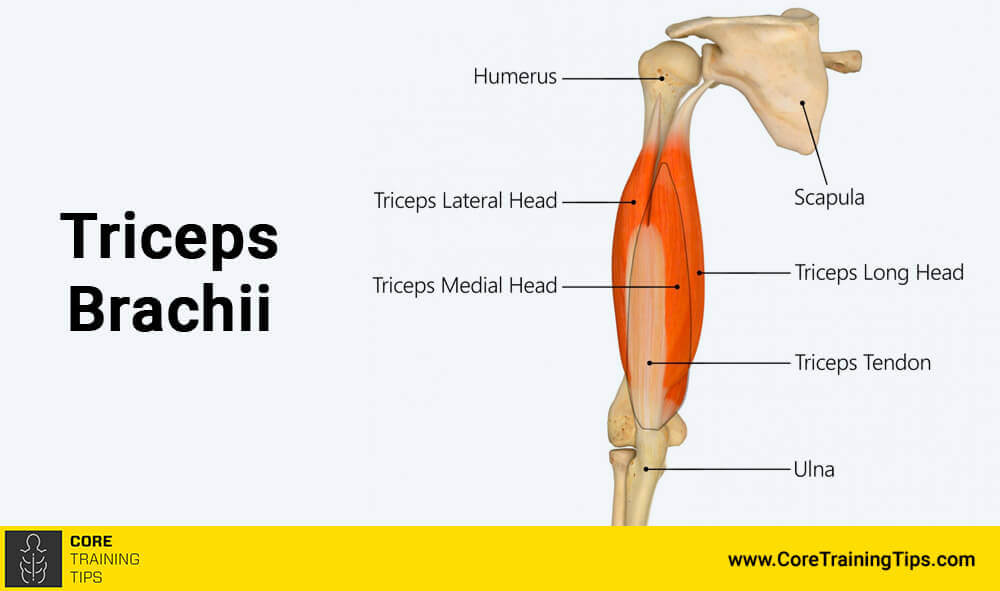
- Long head — the only one that starts on your shoulder blade, not on your upper arm bone. Because it crosses the shoulder joint as well as the elbow, it also helps pull your arm backward and in toward your body. Its length changes with the position of your shoulder.
- Lateral head — sits on the outside of the upper arm and is the most superficial of the three. It’s the one that gives the back of the arm its outline.
- Medial head — the deepest, tucked underneath the other two. It contributes to every single elbow extension you do, at every load.
- Shared ending — all three merge into one tendon that attaches to the olecranon, the bony point of your elbow. That’s why every triceps exercise ends the same way: the elbow straightens.
Why it works: because the long head crosses the shoulder, raising your arms overhead puts it on stretch before the rep even starts, while keeping your arms down by your hips leaves it comparatively slack. That’s the reason this article contains both an overhead exercise and a kickback. Same muscle, two different starting lengths for the head that spans two joints. Train only one position and you train two of the three heads properly and the third by accident.
Exercise No.1: TRX Triceps Press
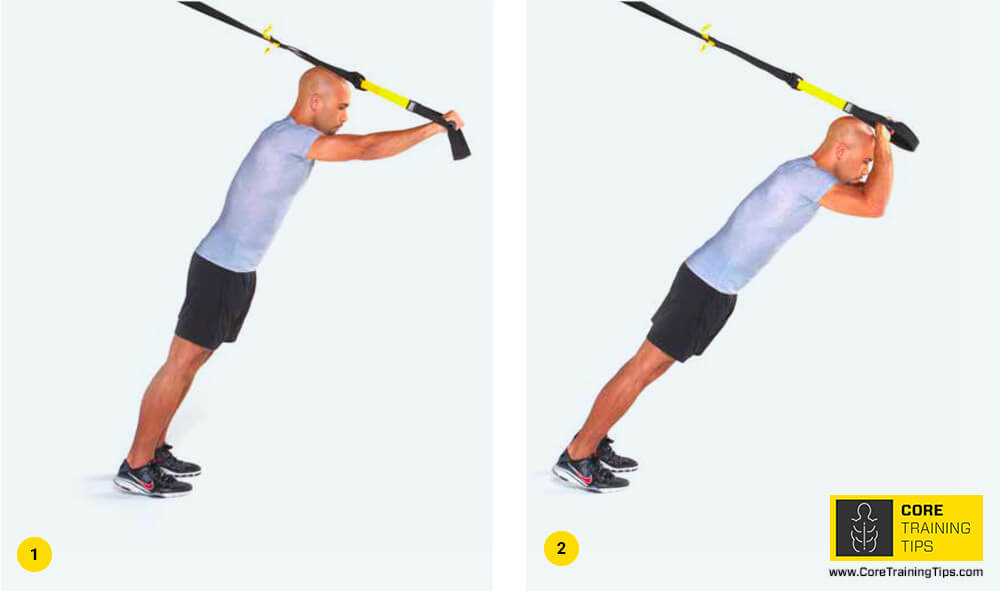
The anchor exercise of the whole article: a standing, elbows-forward press where your head travels between your hands.
Adjustment: mid length, which is what TRX specifies for this movement in its own exercise guide. If you’re tall or the straps rub your forearms, lengthen them all the way — TRX’s general rule is that pressing movements go fully lengthened, so you’re not doing anything unusual by going longer.
Exercise benefits:
- Loads the triceps with your shoulders flexed, so the long head works from a lengthened position.
- Your abs and glutes hold a plank the entire set — TRX lists the triceps and the abs as targets together, and that’s accurate.
- Resistance scales instantly. One step forward or back changes the whole set.
Exercise technique:
- Face away from the anchor with a handle in each hand, arms straight in front of you at roughly eye level, palms facing down.
- Walk your feet back until the straps are tight and your body leans forward in one straight line from ears to heels. Brace your abs and squeeze your glutes.
- Bend only your elbows, letting them travel forward as your body lowers, until your head comes through between your hands and your hands finish beside your temples.
- Keep your upper arms where they are and straighten your elbows to press back to the start. Breathe out on the way up, in on the way down.
Sets and reps: 2 to 3 sets of 12 reps, resting 30 to 60 seconds. If 12 feels easy, don’t add reps — step your feet farther back next session.
Common mistakes:
- Hips sagging toward the floor. The moment your lower back arches, this stops being a triceps press. Squeeze your glutes before the first rep, not after the fifth.
- Elbows flaring out to the sides. They should point forward, roughly in line with your shoulders. Flared elbows shift load onto the shoulder joint.
- Shoulders drifting down as you press. If your upper arms drop during the rep, your chest is stealing the work. Only the elbow joint should move.
- Going too deep too soon. Depth is not the goal; a controlled, pain-free range is. Keep your wrists neutral, in line with the forearm.
Make it easier: walk your feet in toward the anchor so you stand more upright. The closer to vertical you are, the less of your body weight your arms hold.
Make it harder: walk your feet farther back so your body angle gets steeper. Feet together adds a balance challenge on top.
💡 Coach’s note: film one set from the side. The straight-line check from ear to heel is obvious on video and invisible from the inside.
Exercise No.2: TRX Triceps Kickback
The mirror image of the press. Here your arms stay down beside your hips, which is the position where the long head is at its shortest — and where your shoulders don’t have to go overhead at all. That makes this the go-to option if raised arms bother your shoulder.
Adjustment: mid length or fully lengthened. TRX lists both as valid for this one.
Exercise benefits:
- Trains elbow extension without putting your shoulders into an overhead position.
- TRX names the triceps, abs, glutes, back and forearm muscles as targets — it’s a genuinely full-body position despite looking like an arm exercise.
- Pairs directly with a back exercise, which is exactly how TRX programs it: a TRX Low Row followed by a Triceps Kickback in one setup.
Exercise technique:
- Face the anchor point with a handle in each hand, arms straight down beside your hips, palms facing behind you, shoulders pulled back and down.
- Take an offset stance — one foot slightly forward, the back heel lifted off the floor. Lean back until the straps are tight.
- Bend only your elbows so your body lowers backward. Stop when your elbows reach about 90 degrees.
- Straighten your elbows and push your hands toward your hips, or just past them, to bring your body back upright.
- Keep your torso in one line the whole time. Nothing bends but the elbows.
Sets and reps: 2 to 3 sets of 8 to 12 reps, 30 to 60 seconds of rest.
Common mistakes:
- Using the hips to rock back up. If your butt swings forward at the end of each rep, the set is over — stand more upright and start again.
- Elbows drifting away from your sides. They should stay pinned near your ribs; letting them float turns this into a poor row.
- Shrugging. Shoulders stay down and back. If your traps are burning, your shoulder blades have given up.
- Both heels flat on the floor. Without the offset stance you’ll fight for balance instead of working your triceps.
Make it easier: stand more upright with your feet farther from the anchor, and lean back less.
Make it harder: walk your feet closer to the anchor so you lean back farther, or narrow your stance.
Exercise No.3: TRX Overhead Triceps Extension
This one is advanced in the boring, practical sense: if you can’t hold a solid plank for 45 seconds, skip it for now. TRX programs a Triceps Extension alongside the Triceps Press in its own arm workout, and the reason is the elbow position — here the elbows stay pointing forward and overhead through the whole rep, which keeps the long head loaded from a fully stretched position.
Adjustment: fully lengthened. This is a pressing movement, and lengthening the straps is also how you increase the difficulty.
Exercise benefits:
- Puts the long head in its longest position of any exercise here.
- Demands real trunk stiffness, so it doubles as an anti-extension core exercise.
Exercise technique:
- Hold a handle in each hand and turn to face away from the anchor point.
- Put your hands overhead with about 90 degrees of bend in your elbows, elbows pointing forward, wrists neutral — not bent back, not curled in.
- Take a split stance, lunging forward until the straps are tight, and keep that foot position for the whole set. Brace your abs.
- Breathe out and slowly straighten your elbows, pressing your body away from your hands. Your upper arms shouldn’t move.
- Breathe in and lower yourself back with control, head and spine in one line. No sagging at the low back or hips.
Sets and reps: 2 sets of 6 to 8 reps to start, 60 seconds of rest. This is a low-rep exercise until the position feels automatic.
Common mistakes:
- Ribs flaring and the low back arching. The most common failure here, and the reason it’s rated advanced. If your back aches, stop the set.
- Elbows swinging outward. They point forward, away from your body, the entire time. Wrists stay neutral.
- Feet moving between reps. Set the split stance once and leave it — moving your feet mid-set silently changes the load.
Make it easier: stand closer to underneath the anchor point and shorten the straps.
Make it harder: position your body farther away from underneath the anchor and lengthen the straps.
Exercise No.4: TRX Chest Press
Not a triceps isolation exercise, and that’s the point. TRX lists the pecs, abs and triceps as targets, which makes this the heaviest triceps load in the article. If you only ever do the two elbow-only exercises above, you’re leaving the strongest stimulus on the table.
Adjustment: fully lengthened. TRX names this exercise specifically as the reason to lengthen — it keeps the straps from rubbing on your arms.
Exercise benefits:
- Loads the triceps as part of a compound press, so you can handle far more of your body weight than in an elbow-only exercise.
- Trains chest, shoulders, triceps and trunk in one movement, and builds directly toward push-ups if you can’t do them yet.
Exercise technique:
- Face away from the anchor, a handle in each hand, arms straight out in front of you at chest height and barely wider than your torso.
- Walk your feet back and hold a strong plank through your torso.
- Bend your elbows and lower your body toward your hands, keeping your body in one line.
- Straighten your elbows to press back to the start.
Sets and reps: 2 to 3 sets of 12 reps, 30 to 60 seconds of rest.
Common mistakes:
- Hips leading the way down. Chest and hips arrive together, or not at all.
- Hands too wide. Wide hands shift work to the chest and stress the shoulder. Keeping them close to torso width keeps the triceps involved.
- Starting too steep. Beginners should stand more upright and walk their feet back over weeks, not within one session.
Make it easier: stand more upright, feet farther from the anchor.
Make it harder: walk your feet backward toward the anchor point to deepen the angle. To bias the triceps further, bring your hands closer together.
Exercise No.5: TRX Push-up
The hardest triceps loading you can get from a suspension trainer, because now your feet are the unstable end and your hands are on the floor. TRX rates it intermediate and is blunt about the prerequisite: be comfortable with a regular bodyweight push-up first.
Adjustment: mid-calf. That’s the standard setting for every exercise where your feet go into the foot cradles.
Exercise benefits:
- The most body weight of any exercise here goes through your arms, and your feet are suspended, so the core load is far higher than in a floor push-up.
- Trains the triceps in a closed chain, with your hands fixed — a different demand from every other exercise on this list.
Exercise technique:
- Set the foot cradles at mid-calf height and put your toes in them, starting from your knees.
- Lift your knees off the ground, flex your feet, and hold a plank on your hands.
- Bend your elbows and lower your whole body toward the floor as one piece.
- Keep your knees straight and your body stiff, and straighten your elbows to push back up.
Sets and reps: 2 to 3 sets of 6 to 12 reps, 60 seconds of rest. Stop the set the moment your hips drop.
Common mistakes:
- Hips sagging. The straps punish this instantly and your lower back pays for it.
- Elbows flaring to 90 degrees from your body. Keep them at roughly 45 degrees to protect the shoulder and keep the triceps working.
- Starting from standing. Always get into and out of this one from your knees.
Make it easier: do it from your knees with the cradles set higher, or replace it with the TRX Chest Press until you can do 10 clean floor push-ups.
Make it harder: lift one foot out of the cradles, or raise your hands on a low step to increase the range.
A ready-made TRX triceps workout
Twenty minutes, five exercises, in this order. It runs heavy to light on purpose: the compound presses go first while you’re fresh, the elbow-only work goes last.
| Order | Exercise | Strap length | Sets × reps | Rest |
|---|---|---|---|---|
| A | TRX Chest Press | Fully lengthened | 3 × 12 | 45 s |
| B | TRX Push-up (feet in cradles) | Mid-calf | 2 × 6–10 | 60 s |
| C | TRX Triceps Press | Mid length | 3 × 12 | 45 s |
| D | TRX Triceps Kickback | Mid length | 3 × 8–12 | 30 s |
| E | TRX Overhead Triceps Extension | Fully lengthened | 2 × 6–8 | 60 s |
Beginner version: drop B and E, do A, C and D for three sets each. That’s still a complete triceps session and it takes about twelve minutes.
Want a superset? TRX’s own arm guideline is to run two triceps exercises back to back without rest, or pair one biceps exercise with one triceps exercise. C and D work perfectly for that — and here’s how to train biceps on the TRX. If you’d rather have the arm work inside a full session, try the 30-minute whole-body TRX workout with its free printable PDF.
How often should you train triceps
Two to three sessions a week, with at least 48 hours between the hard ones. The triceps is a small muscle with a fast recovery time, but it also works in every pressing exercise you do — so it gets more volume than you think.
Here’s how it actually fits into a week:
- Training three times a week? Put the full workout above into one session, and let the TRX Chest Press in your other sessions cover the rest.
- Training every day? Do the dedicated triceps work twice, and keep the other days to legs, back and core.
- Short on time? Two exercises, three sets each, twice a week is enough to get stronger.
Progress by changing your body angle, not by adding endless reps. Once you can hit the top of the rep range with a controlled tempo, move your feet an inch or two (2–5 cm) and keep the reps the same. That’s the whole progression model on a strap, and it’s why a suspension trainer stays useful for years.
Finish with a couple of minutes of static stretching for the triceps and chest once the session is done.
Safety Tips
Triceps work on a strap is joint-friendly compared with heavy skull crushers, but two joints still deserve respect: the elbow and the shoulder.
- Elbow pain during the rep. Usually depth. Shorten the range until it’s pain-free rather than pushing through, and check that your wrists are straight — a bent wrist changes the pull on the forearm and refers pain to the elbow.
- Tennis elbow (lateral epicondylitis). Skip the kickback in particular. Gripping hard while hanging your weight off the handles loads exactly the tendon that’s already irritated. See a physio before you train around it, not after.
- Shoulder pain or impingement-type symptoms. Drop the two overhead exercises, the Triceps Press and the Overhead Triceps Extension. The kickback keeps your arms down by your hips and is usually the tolerable option.
- Wrist pain in the push-up. Push through the whole hand, not the heel of the palm, and reduce the number of sets before you reduce the quality of the reps.
- Recent surgery on the shoulder, elbow or wrist. Don’t start here. Get cleared first.
⚠️ Before every set, test your anchor. Pull down hard on both straps with your body weight before you lean into them. DO NOT trust a door anchor on a door that opens toward you, and DO NOT anchor to anything you haven’t loaded first. Full options are in the guide to TRX anchoring solutions.
This article is general fitness information, not medical advice. If you have a current injury or a diagnosed joint condition, talk to a physician or physical therapist before starting.
Gear you need
Disclosure: This post contains affiliate links. If you buy through them, I may earn a commission at no extra cost to you — and you get 15% off with my code TRX15LUKAS. I only recommend gear I actually use.
You need one thing: a suspension trainer and somewhere to hang it. Every exercise in this article works with any TRX model, because none of them need extra hardware beyond the straps themselves.
If you’re choosing between models, the TRX suspension trainer comparison walks through what actually differs between them. And whichever one you land on, use the code TRX15LUKAS at checkout for 15% off anything TRX sells — trainers, anchors, apparel, education courses, the app. Here’s how to apply the TRX discount code.

Gear I actually use
on any TRX® order — use this code at checkout
TRX15LUKASApplies to all TRX products — suspension trainers, training tools, apparel, education and apps.
Swipe or scroll sideways for more picks →
TRX® HOME2 SYSTEM
The all-rounder for training at home
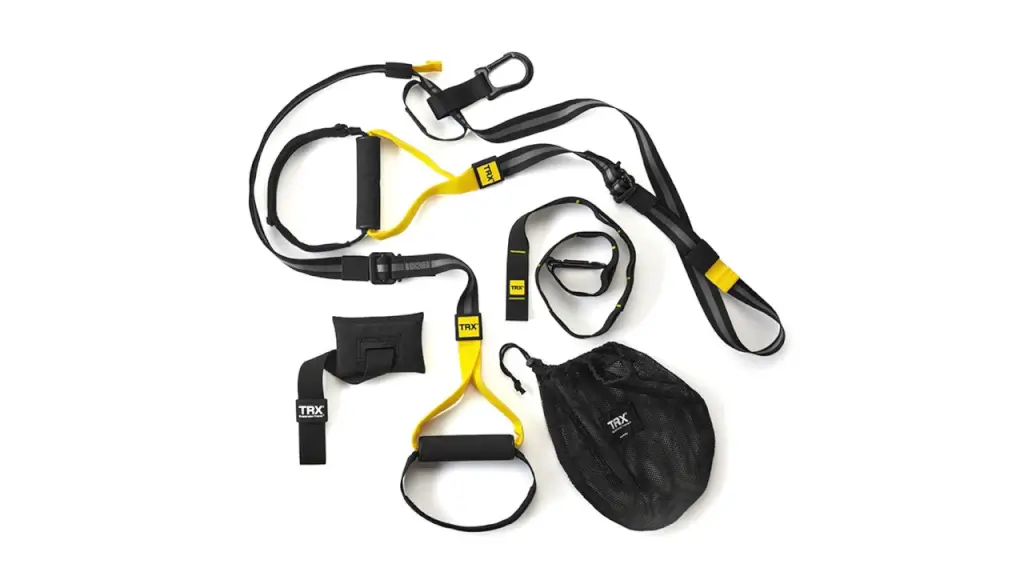
- ✓Door anchor, suspension anchor & mesh bag included
- ✓Free 30-day trial of the TRX App
- ✓Sets up anywhere in seconds, no tools needed
TRX® PRO4 SYSTEM
Built for heavy use and for trainers
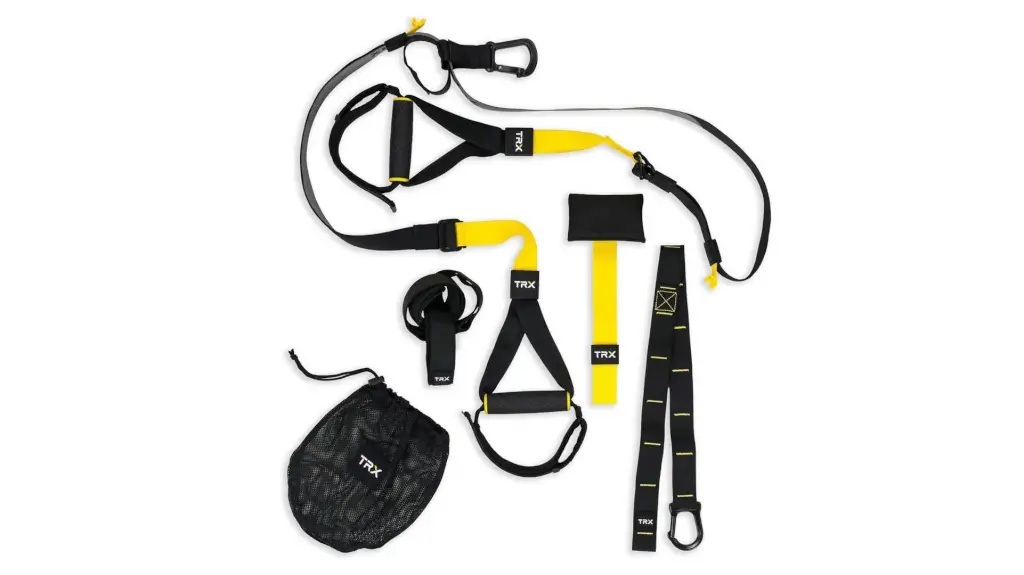
- ✓Door anchor, suspension anchor, Xtender & bag
- ✓Locking carabiner for a secure anchor point
- ✓Rubber handles that resist sweat and friction
TRX App™ Programs
If you have the straps but not a plan
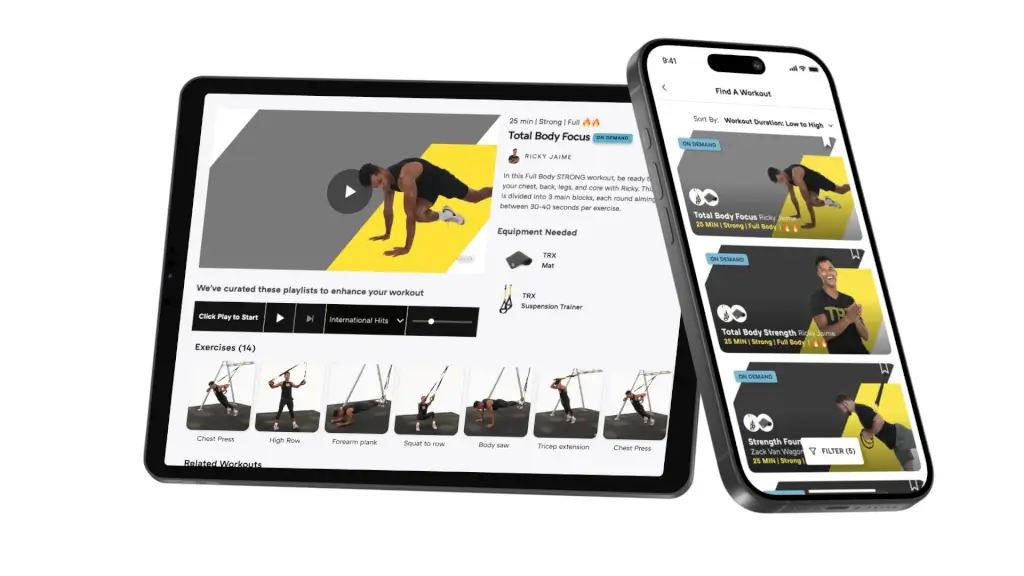
- ✓10+ structured on-demand training programs
- ✓Free 30-day trial, cancel any time
- ✓HSA/FSA eligible
YBell®
Four tools in one, for small spaces
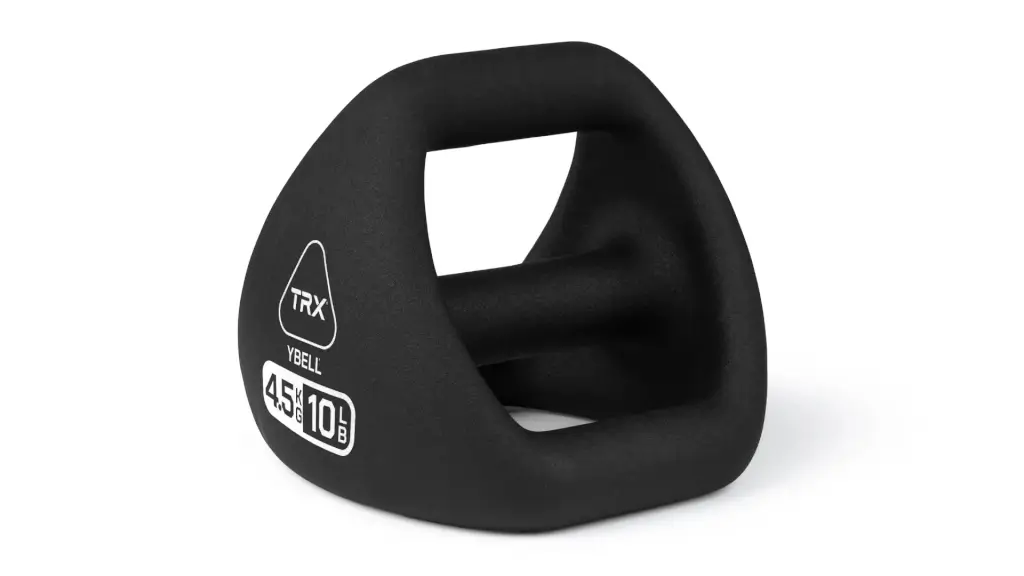
- ✓Dumbbell, kettlebell, med ball and push-up stand
- ✓Neo Series: 2.4–27 lbs (1.1–12 kg)
- ✓Pro Series: 10–44 lbs (4.5–20 kg), 2-year warranty
TRX® RIP TRAINER™
For rotational power and a stronger core
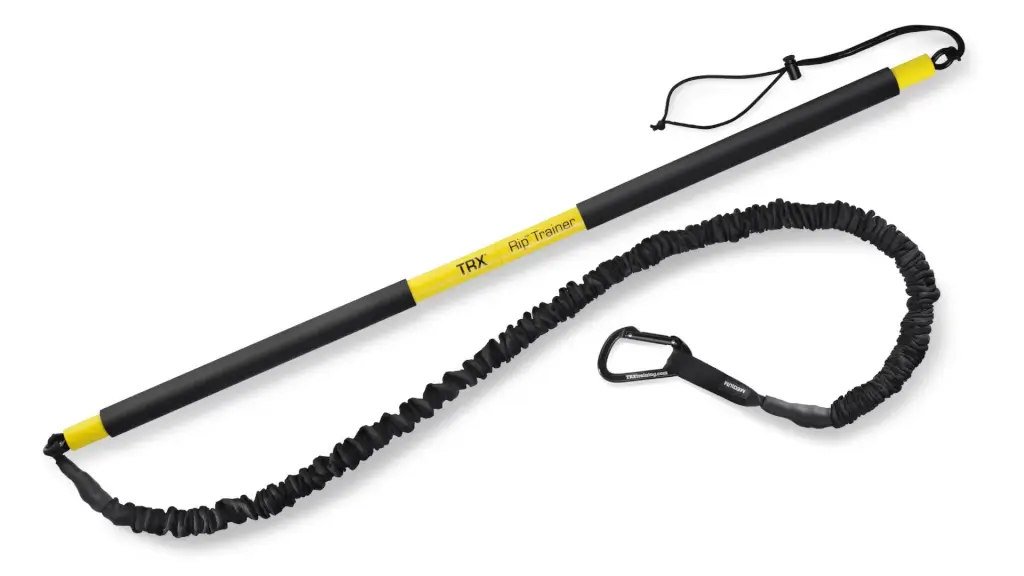
- ✓Door anchor, resistance cord & safety strap included
- ✓Built for rotation — golf, tennis, baseball
- ✓Packs into a backpack, set up in seconds
Disclosure: the links above are affiliate links. If you buy through them, I may earn a commission at no extra cost to you — and you still get 15% off with code TRX15LUKAS. I only recommend gear I actually use. Prices and availability are shown on trxtraining.com and can change.
Check the price before you buy, and buy from the official store. Counterfeits are common and the failure point is always the same: the anchor loop. If you’re unsure what you’re looking at, here’s how to tell a genuine TRX from a fake.
TRX triceps exercises: frequently asked questions
Conclusion
Five exercises, two joint positions, one printable table. That’s the whole triceps problem solved with a strap and a door.
The part worth remembering isn’t the exercise list — it’s the progression. You don’t get stronger on a suspension trainer by doing more reps. You get stronger by moving your feet. One step back next week, another the week after, and the same 12 reps get harder every time without you touching a single weight.
Try the workout above twice this week, keep your reps clean, and note where your feet were. That number is your training log. 💪